Competency-Based Education (CBE) is reshaping how US schools define student achievement, moving away from seat-time requirements and toward verified skill mastery. We can see it happening and, hopefully, you do too. So, instead of counting hours in a classroom, students now advance when they can prove what they know. For everyone from K-12 administrators, to vocational school directors and homeschool collective leaders, this shift changes everything from how grades are recorded to how student progress is tracked across the school year.
This guide breaks down what CBE looks like in practice in 2026, why mastery-based grading is replacing traditional A-F report cards, and how career-connected learning is giving students a plan that goes well beyond a diploma.
Key takeaways
- Competency-based education advances students when they can demonstrate mastery of a skill, making seat time an unreliable proxy for actual learning. Not when they’ve accumulated enough classroom hours.
- The Carnegie Unit was designed for administrative convenience in 1906, not to measure learning quality; its dominance is increasingly difficult to justify in a labor market that demands verified, portable skills.
- Mastery-based grading replaces averaged letter grades with proficiency designations tied to specific, observable competencies — giving employers and families a more accurate picture of what a student can actually do.
- Stackable industry-recognized credentials earned before graduation give students direct labor-market value at 18, whether or not they pursue a four-year degree.
- Performance-based assessments are harder to game with AI tools than standardized tests, because students must produce real, verifiable work rather than select from pre-written answer choices.
- Digital micro-badges offer a mechanism for verifying collaboration, adaptability, and other human-centric skills that traditional grades have never reliably captured.
- The record-keeping demands of CBE — tracking competency completions, credential pathways, and mastery designations simultaneously — quickly outgrow spreadsheet-based systems as enrollment grows.
Table of contents
- What Is Competency-Based Education and Why Does It Matter Now?
- Why Is Seat-Time Being Replaced by Mastery-Based Grading?
- How Does Career-Connected Learning Fit Into the CBE Model?
- What Is Performance-Based Assessment and How Does It Replace Standardized Tests?
- How Are Schools Measuring Soft Skills Through Micro-Badging?
- How Can School Management Software Support a CBE Framework?
- Ready to Manage CBE Without the Administrative Weight?
- Related Reads
- FAQ
What Is Competency-Based Education and Why Does It Matter Now?
Competency-Based Education is a model where students advance by demonstrating mastery of a specific skill or knowledge area, regardless of how long that process takes. So, a student who grasps algebra in six weeks moves on. But, at the same time, a student who needs four months gets the time they need, without penalty.
This is a significant departure from the Carnegie Unit system, which has officially governed US education since 1906. Under that model, one high school credit equals roughly 120 hours of classroom instruction. The logic was administrative convenience, not learning quality. In 2026, that logic is becoming increasingly difficult to defend.
So, at the time of this writing, families are asking harder questions. Meanwhile, employers are demanding verified, portable skills. And then, students arriving at the workforce or at a college application desk are discovering that a letter grade on a transcript says very little about what they can actually do. We’ve seen students complain about that stuff all over the inter-webs, too!
Now, CBE answers that problem directly. Let’s see how:
Why Is Seat-Time Being Replaced by Mastery-Based Grading?
Did you know? The Carnegie Unit’s purpose was never to measure learning. It originally aimed to standardize college admissions, in an era before standardized tests. Consequently, two students can receive the same “B” in biology for entirely different levels of understanding, and neither transcript tells an employer or admissions officer which student can apply that knowledge under pressure.
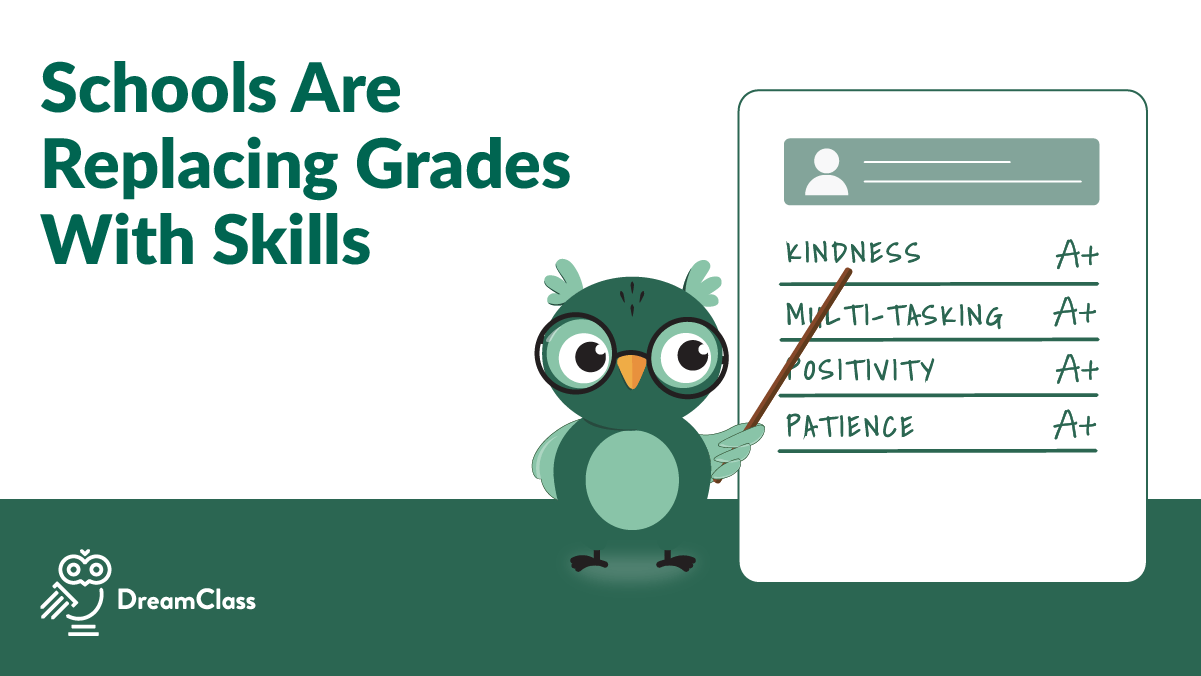
Mastery-based grading replaces traditional letter grades with proficiency markers. Instead of a “C+,” a student receives a designation such as “Proficient,” “Developing,” or “Advanced.” Each marker ties to a specific, observable competency.
For school administrators, the practical challenge is scheduling. When 30 percent of a class finishes Algebra 1 in November, while the rest need until March, the standard bell schedule breaks down. Schools adopting CBE are responding in several ways:
- Flexible pacing windows within defined academic terms
- Mixed-age groupings organized by skill level, rather than grade
- Digital gradebook systems that track competency completion, rather than time-based credits
- Mastery Transcripts that visualize a student’s specific strengths, instead of averaging them into a single letter
And these are just the ways that we know of. But the shift also affects how schools communicate with families. So, parents accustomed to a simple A-F report card need clear, readable documentation of what “proficient in data analysis” actually means for their child’s future. And that’s so much more helpful in decision making, isn’t it? But how about careers?
How Does Career-Connected Learning Fit Into the CBE Model?
If you think about it, career-connected learning is the practical outcome layer of competency-based education. While CBE defines how students demonstrate mastery, career-connected learning defines what that mastery prepares them for. And together, they form a coherent framework for schools that want to close the gap between classroom instruction and workforce readiness.
In 2026, we’ve found that the most visible expression of career-connected learning is most likely the rise of stackable K-12 credentials; .the industry also knows these as Industry-Recognized Credentials (IRCs). These are third-party certifications with direct labor-market value, which students actually earn before graduation.
Examples include:
Each project must be assessed against a consistent rubric, stored in a student record, and then communicated clearly to parents.
Here’s something interesting: Some of the advantages of project-based learning are especially visible when a credential track anchors around one completed project. Vocational schools and career-technical education (CTE) programs have built four-year certification roadmaps around these credentials. So, a freshman entering a technology track might begin with digital literacy. That’s a plus, because by senior year, they can graduate as a certified web architect, with a portfolio of third-party validated skills that a transcript simply cannot replicate. That kind of approach can really put them on a path to success.
And, of course, for families, this creates a genuine alternative to the college track. If a student decides not to pursue a four-year degree, they have a stack of verified credentials ready for a high-wage career at 18. So, disaster is averted. Meanwhile, students who do go to college often arrive with credits already earned and a clearer sense of professional direction.
Great school management software with responsive support
By implementing Dreamclass we have streamlined our processes at the school, reduced data entry and increased transparency of account management to reduce errors. Overall a great boost to business productivity.
Director Primary secondary education
The administrative challenge, here, is managing these certification roadmaps alongside standard academic records. Schools need systems that can track both a student’s progress toward a state diploma standard and their progress toward, say, an AWS certification exam; often in the same student profile, too. So, let’s turn our attention to assessments, next.
What Is Performance-Based Assessment and How Does It Replace Standardized Tests?
We can see that standardized multiple-choice testing is under growing pressure in 2026, and not just from policy critics. The rise of AI-powered tools has exposed a practical problem: Bubble tests are increasingly easy to game. A student can, with relatively little effort, prepare answers that satisfy a Scantron without developing genuine understanding.
Performance-based assessment (PBA) addresses this by making the test itself a demonstration of real-world capability. Instead of selecting the correct answer out of four options, students must produce a deliverable. Something like a working prototype or a coded application. Maybe even a live chemistry demonstration, conducted in a proctored environment.
Many of the advantages of project-based learning appear here, since students build real artifacts instead of picking an answer. This approach accomplishes several things simultaneously:
- It makes academic dishonesty structurally harder
- It produces tangible artifacts families can share with employers, or with post-secondary institutions
- It closes the gap between what a student learns and what they can demonstrate under real conditions
Adoption of PBA is also evident in a recent trend: Schools building PBA frameworks are investing in maker spaces, simulation environments, and virtual reality labs. These are not cheap either. But the argument is straightforward: An employer who watches a 17-year-old build a functional app during an interview, doesn’t need a GPA to make a hiring decision.
For administrators, performance-based assessments also create a documentation burden. Administrators must assess each project against a consistent rubric, store it in a student record, and then communicate it clearly to parents. Now, imagine the complexity of this system paired with, say, the Montessori educational method. Schools without reliable academic management systems would (and do) find this workload quickly becomes unsustainable.
DreamClass Review (BESTuition)
Our overall experience with DreamClass is very positive, the way that we are able to track students and use our scheduling is far better and more efficient than the way we were doing this before.
Operations Manager Education management
How Are Schools Measuring Soft Skills Through Micro-Badging?
OK. So, we discussed how Mastery-Based Grading is replacing Seat-Time, we saw how Career-Connected Learning fits into the CBE Model, and we glanced at Performance-Based Assessment and how it replaces Standardized Tests. So, three pillars, so far, out of four.
The fourth pillar of the competency-based shift in 2026 is the verification of what researchers call “human-centric” skills:
- collaboration
- ethical reasoning
- adaptability
- communication.
These are the capabilities that AI cannot replicate and employers consistently rank as critical gaps in recent graduates. That makes quite a few of them unemployable; and that’s a real problem. Somehow, we need to be verifying these skills.
Digital micro-badges are the emerging mechanism for verifying those skills. Unlike traditional grades, micro-badges tie to specific, observable demonstrations. So, a student earns a “Team Leadership” badge, not because a teacher felt they were a good leader, but because they coordinated a multi-student project that met defined collaboration standards, which peer review and behavioral analytics verified. That’s one of the advantages of project-based learning. That is, leadership only becomes visible once students actually run something together.
The practical structure for this typically involves:
- Specific challenge-based criteria that must be met to earn each badge
- Peer verification, alongside teacher assessment
- Institutional records that parents and employers can read and interpret
For homeschool collectives and smaller vocational schools, this framework is particularly valuable. One of the persistent criticisms of alternative education models is that they lack rigorous, third-party verification of learning. Micro-badges, especially when schools issue them through recognized digital credentialing platforms, provide that external validation.
Additionally, administrators are beginning to use data analytics to track interpersonal dynamics in real time, measuring whether group work actually produces the collaborative behavior it’s supposed to develop. This represents a meaningful evolution from the old model where teachers simply recorded ‘participation’ as present or absent. This problem is actually quite relatable to some of us, too! This would happen at least as far back as when educators who are now in their 50s were studying in college. Except, now it has managed to work its way down to highschool grades.
Alright. So, complex problems need robust solutions. Let’s have a quick look at how we can deal with these problems, then.
How Can School Management Software Support a CBE Framework?
Implementing competency-based education is not just a curriculum decision; it is an operational one. The record-keeping demands of CBE are substantially more complex than those of a traditional grading system. A single student might be simultaneously working toward:
- A state-required graduation competency in English Language Arts
- A Certified Nursing Assistant credential, through a vocational pathway
- A micro-badge in collaborative problem-solving
- A mastery-based grading record that their parents can read (without a decoder ring 🙂)
Managing all of this in spreadsheets often leads schools straight into a compliance problem. The student file becomes a maze of disconnected documents, and the risk of something falling through the cracks grows proportionally with enrollment.
Schools moving to CBE need management systems that can handle flexible gradebook structures and multi-format student records. Not to mention real-time communication with families who want to know where their child stands on every competency pathway; that is, not just at the end of a semester.
Game-Changer for Private Schools
Lida is the best communicator and is always available to walk me through new processes. DreamClass has truly simplified our administrative tasks, allowing us to focus more on what matters most — our students and their spiritual growth. We highly recommend it to other small schools
Office manager Primary secondary education
For vocational schools managing cohort-based certification programs, the ability to track training hours, competency completions, and credential exam preparation in a single student profile is not a nice-to-have. No, it’s a prerequisite for running a compliant, credible program.
Similarly, homeschool collectives implementing personalized learning progressions need a system flexible enough to accommodate each student’s unique path. That is, while still producing the documentation that umbrella schools and state agencies require.
Ready to Manage CBE Without the Administrative Weight?
One of the advantages of project-based learning is that skill verification matches how students actually work. It should be clear, by now, that if your school is moving toward competency-based education, mastery-based grading, or career-connected learning pathways, the record-keeping demands will grow faster than your current systems can handle. DreamClass gives K-12 schools, vocational programs, and homeschool collectives the structure to track every student’s progress, communicate it clearly to families, and document it for an external audience.
Book a free demo and see how DreamClass handles the operational side of educational programs.
Related Reads
- Formative vs. Summative Assessment: A Practical Guide for Private and Independent Schools
- What Established Private Schools Need from a School Management System
- How New Private Schools Scale from Spreadsheets to Admin-Ready Systems
- How to Digitize Your School’s Workflow with DreamClass
- Calculating Student Information System (SIS) ROI for Small Schools
FAQ
Frequently Asked Questions
What is the difference between competency-based education and traditional education?
Traditional education advances students based on time spent in class, typically measured in Carnegie Units. Competency-based education advances students when they demonstrate verified mastery of a skill, regardless of the time required.
How does mastery-based grading work in practice?
Mastery-based grading replaces A-F letter grades with proficiency designations such as “Advanced,” “Proficient,” or “Developing.” Each designation maps to specific, observable skills, rather than a single averaged score.
What are stackable K-12 credentials?
Stackable credentials are industry-recognized certifications earned by students before graduation. They have direct labor market value and can be accumulated across four years of study, giving students verified skills, whether or not they pursue a college degree.
Can smaller schools implement competency-based education?
Yes. CBE is well-suited to smaller schools, homeschool collectives, and even vocational schools because flexible pacing is easier to manage with smaller cohorts. The main requirement is a student record system capable of tracking competency progress rather than time-based credits.
How do performance-based assessments differ from standard tests?
Performance-based assessments require students to produce tangible work, such as building a functioning application, completing a lab experiment, or presenting a project. Unlike multiple-choice tests, they are difficult to game with AI tools and produce artifacts families can share with employers later.