Managing a primary school is a challenging duty. And that’s because, as the head of a school that enrolls young children, you and the faculty staff are responsible for their development and their safety as well. A school information management system is a centralized platform that helps primary schools organize administration, student data, and daily operations in one place. But how can you use School Information Management Systems in primary schools effectively?
To achieve all these goals, all paper-based processes and complicated administrative activities should be simplified first. In primary schools, reducing administrative friction is essential so teachers can focus on students rather than paperwork. By making processes seamless, you and your teaching staff can focus on young students’ educational needs and goals without distractions. With a school information management system in place, this is entirely achievable.
Let’s see exactly how.
What are the core features in school information management systems?
A school information management system typically includes a broad set of tools designed to support daily school operations. In primary schools, these systems focus especially on safety, communication, and coordination. DreamClass, for example, allows you to complete these processes in a seamless way.
1. How can you create and manage your school’s curriculum online?
With DreamClass, which also functions as a curriculum management platform, curriculum creation becomes paperless and flexible. Schools can add, edit, delete, and copy courses and classes until the appropriate structure is formed. This system supports collaboration but does not replace educational decision-making by teachers. Curriculum hierarchies can be shared with teachers and used collaboratively to produce a coordinated outcome for the school’s benefit.
2. How can you run your enrollment process more efficiently?
Enrollment management is one of the most time-sensitive processes in primary schools. Digitizing student data helps eliminate application errors, paperwork, and repetitive manual tasks. In most schools, automated enrollment reduces delays and improves communication with parents and guardians. Using School Information Management Systems in primary schools makes enrollment clearer and more predictable.
3. How do you manage classes and classrooms digitally?
Once the curriculum is prepared, schools can organize classes and classrooms digitally. Teachers can be assigned to classes, students grouped appropriately, and classrooms mapped based on availability. For primary schools, this level of coordination reduces confusion and improves daily flow. All tasks can be completed in a few clicks, keeping staff, students, and families aligned.
4. How can attendance records be stored and managed online?
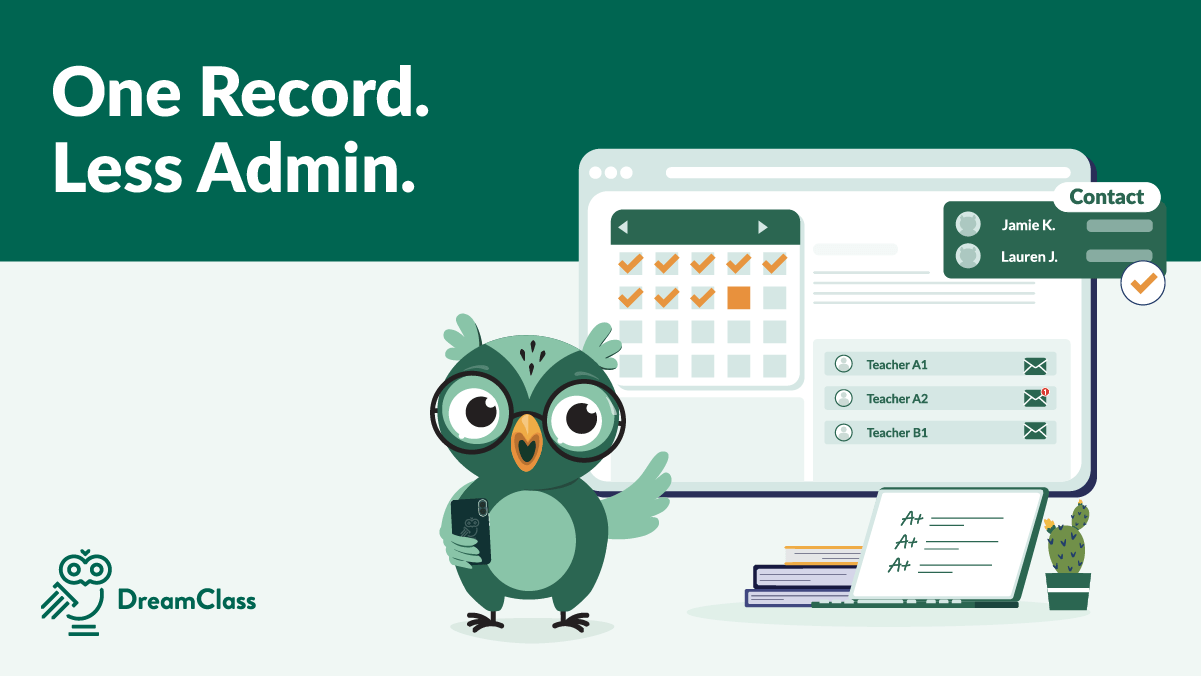
Attendance tracking is closely tied to student safety in primary schools. Teachers can record attendance online instead of using paper logs. This process allows administrators to access attendance data immediately and respond when needed. Parents and guardians can also be informed promptly, while teachers remain focused on their classrooms.
5. How can primary schools manage payments and tuition fees efficiently?
A school information management system typically includes basic financial tracking. Schools can store tuition fee records, monitor outstanding balances, and identify which payments may need reminders. This does not replace accounting software but supports day-to-day fee visibility.
6. How can schools communicate with parents more effectively?
Parent communication is essential in primary education. Notifications related to absenteeism, schedule changes, or upcoming parent briefings can be sent directly through the system. In primary schools, timely communication builds trust and supports student well-being.
All the features above support basic administrative tasks that most schools must perform. However, in primary schools these processes are more critical because of students’ age, safety needs, and supervision requirements.
Why are these processes so critical for primary schools?
Primary school principals and faculty are responsible first and foremost for children’s safety. Teaching quality and learning outcomes depend on minimizing distractions and managing daily challenges efficiently. School Information Management Systems help remove operational obstacles so educators can focus on students.
1. How does online classroom management reduce unnecessary transitions?
Young students are difficult to coordinate without clear information. Online access to classroom availability allows teachers to plan ahead and guide students efficiently. This reduces unnecessary movement and supports safer school environments, especially when managing multiple groups.
2. How can school systems reduce bureaucracy for teachers?
Teachers act in loco parentis and must give students their full attention. Administrative systems allow teachers to complete essential records quickly while administrators handle follow-up actions. This separation of responsibilities improves focus without compromising oversight.
3. How do role-based access rights improve school operations?
School information management systems use role-based access controls. Teachers, administrators, and staff each access only what they need. This structure improves efficiency while protecting sensitive information.
4. How can schools notify parents discreetly about due payments?
Digital notifications allow schools to communicate payment reminders discreetly and reliably. Compared to paper notices, digital communication reduces errors and ensures messages reach guardians directly.
5. How can primary schools remain remote-ready and reopen with confidence?
Schools must be prepared for unexpected disruptions. Remote-ready systems allow schools to manage operations from anywhere without local maintenance or technical support. Communication with parents remains consistent, and transitions are handled with greater confidence.
How do you choose the right school information management system for your primary school?
School Information Management Systems help primary schools improve coordination, safety, and administrative efficiency. DreamClass offers a cost-effective solution that supports daily operations without adding complexity.
FAQ
Frequently Asked Questions
What are the 6 principles of SBM?
SBM commonly refers to School-Based Management. Its principles are often framed around decentralizing decision-making and improving accountability at the school level. In practice, SBM focuses on shared leadership, stakeholder participation, transparency, responsibility for outcomes, efficient use of resources, and continuous improvement.
What are the 5 main types of management information systems (MIS)?
The five common MIS categories are Transaction Processing Systems (TPS), Management Information Systems (MIS), Decision Support Systems (DSS), Executive Information Systems (EIS), and Office Automation Systems (OAS). In schools, these map to day-to-day record keeping, reporting, planning support, leadership dashboards, and communication workflows.
What are the 5 key performance indicators in school?
Common school KPIs include attendance rates, academic performance outcomes, student progress over time, behavior/discipline trends, and family engagement. Schools also track operational KPIs like enrollment stability and fee collection, when relevant, to smooth out daily administration.